NetDirector Enables Next-Generation Integration with Black Knight’s LoanSphere Bankruptcy and LoanSphere Foreclosure Solutions

Tampa, FL – February 6, 2018 – NetDirector, a cloud-based data exchange and integration platform, has introduced for users a new group of transactions that integrate with LoanSphere Bankruptcy and LoanSphere Foreclosure technology solutions from Black Knight, Inc. (NYSE:BKI), a leading provider of integrated software, data and analytics to the mortgage and real estate industries. The latest available transactions will help users reduce the time they spend on manual searches, as well as streamline the overall workload of default servicing firms.

The primary function of the new transactions is Referral Status Change Updates. The status change update for referrals has previously been available in the NetDirector integration suite, however, this new functionality adds status change updates for issues, holds, and reprojections. With this new external workflow, firms can be notified automatically when issues arise on referrals from the servicer, or when a referral is placed on hold (or taken off hold) by the servicer. Additionally, reprojections for files can be automatically updated.

This new capability completes an extensive suite of offerings specifically for Black Knight’s LoanSphere Data Integration Services (DIS) version 3 users. DIS is a web-based integration tool that enables third-party applications and case management systems to interface directly with Black Knight’s default technologies, including LoanSphere Bankruptcy and LoanSphere Foreclosure. Firms will experience a less labor-intensive process and far fewer manual searches to understand the status of important files throughout the default lifecycle. As the conditions of the foreclosure market continue to dictate a higher degree of efficiency among firms, it is more critical than ever to utilize technology to automate certain manual processes so employees can be utilized at their full potential for more complex tasks.

“Firms taking advantage of this new functionality can be made aware automatically when an issue or hold is rejected, or a reprojection is denied,” said Darren Meiggs, VP of Operations at NetDirector. “This allows them to focus on the files that need their timeliest attention, without the labor-intensive process of manually identifying these files.”

Firms utilizing the Referral Status Change Updates can also be made aware automatically when a file is closed by the servicer and is ready to begin the billing process. This helps firms improve the efficiency and accuracy of their billing process, ensuring that they receive payment as quickly as possible.

Other transactions that NetDirector has recently made available for Black Knight’s default applications include Attorney Workload Request/Response, Referral Request/Response, Document Requests, Reflag Referral Requests, and Open Referral Request. The suite of transactions available for integration to LoanSphere Bankruptcy and LoanSphere Foreclosure users continues to expand and is based largely on active feedback and requests from current users.

This new wave of enhancements for Black Knight’s default applications and NetDirector’s integration suite has driven integration for LoanSphere Bankruptcy and LoanSphere Foreclosure users to the next level. The transactions create a higher level of specificity and control while enhancing the user experience on all sides and maintaining the level of security and consistency that firms have come to expect in a technology partner.

Company Bio:

NetDirector provides a secure cloud-based data and document exchange solution for the healthcare and mortgage banking industries to deliver seamless data integration between parties. NetDirector bridges gaps created by disparate systems & technologies by allowing companies at any location to share data & documents securely over a single internet connection with any other member of the ecosystem. Our approach allows trading partners to collaborate and exchange data in a seamless, bi-directional, real-time manner. With security and longevity as a focus, NetDirector is a certified SOC 2 type II and HIPAA Compliant company, a 6-year member of the prominent Inc. 5000, and currently processes more than 9 million transactions per month.

NetDirector Continues to Provide Best in Class Automation to Improve Compliance in Default Servicing Firms

TAMPA, Fla.Oct. 5, 2017 /PRNewswire/ — NetDirector, a cloud-based data exchange and integration platform, provides several data/document automation options for default servicing firms to promote increased compliance throughout the industry. Additionally, NetDirector has maintained and standardized the SOC 2 Type II security procedures in-house to ensure compliance at all points in the flow of data.

With the ever-changing atmosphere of the default servicing industry, it is important for firms to maintain the quality and compliance of the work they do while focusing on efficiency and their bottom line. Among the services available to improve compliance through automation are:

SCRA Military Search

The Service members Civil Relief Act (SCRA) requires foreclosure attorneys/trustees check whether borrowers are active duty military members. NetDirector’s Military Search interface streamlines this process and allows subscribers to check active duty status without leaving their case management systems (CMS), alleviating data keying errors and improving timelines.

Firms are required to perform this search on a regular basis to maintain compliance – the most common solution is simply to dedicate employee hours to performing the searches and logging the information. This is an expensive and inefficient solution, that only mitigates the compliance risks to a certain degree – the human element of this solution leaves room for compliance errors that foreclosure firms simply cannot afford.

“NetDirector has allowed us to focus on our core competencies by managing our data & document integration needs. Our firms are seeing the benefits of eliminating data entry and manual business processes for military search, document uploads, and milestone events,” said Ron Llewellyn, Associate Director of Application Services at Barrett Daffin Frappier Turner & Engel L.L.P.

Additionally, the NetDirector automated military search is fully compatible with the recent DoD website enhancements – many firms are already utilizing NetDirector to solve the challenges of integrating with the new website without increasing dedicated labor and resources to an ongoing concern. For more detailed information on PACER automation, click here to visit our website.

PACER Bankruptcy Search

The Federal court has several bankruptcy court district and divisions upon which bankruptcy dockets are available for verifying bankruptcy filings. NetDirector’s Bankruptcy PACER integration suite alleviates the manual need to log in to multiple court sites (both National and Regional) and/or manually search for the bankruptcy filing -thereby reducing timelines.

The round-trip data interface allows NetDirector subscribers to send requests to the PACER Case Locator site to search for current and prior bankruptcy filings. The automated response can include information on cases filed in other districts/divisions and links to current and prior case dockets and documents. More importantly, returned searches and dockets have live hyperlinks within the PDF documents – saving time by eliminating the need to re-key search information and providing a direct link to cases and docket information for future retrievals. This directly increases a firm’s compliance while automating and simplifying the amount of work required for this mandatory step in the foreclosure process.  For more detailed information on PACER automation, click here to visit our website.

“NetDirector has played a key role in increasing system and workflow efficiency across multiple departments,” said a representative of Rubin Lublin, LLC. “With the processes and checks they have in place we can feel assured that the integration is working and accurate. I have worked in the foreclosure industry over 17 years, and NetDirector is by far the best thing to come along for firms in the past decade.”

Industry Leading Security Standards for Compliance

The SOC 2, or Service Organization Controls 2, is an examination under AICPA standards designed for technology service companies to demonstrate controls around data security and processing integrity. The SOC 2 reports are intended to meet the needs of a broad range of users that need to understand internal controls at a service organization as it relates to security, availability, process integrity, confidentiality and privacy. The Type II report is a report on management’s description of a service organization’s system and the suitability of the design and operating effectiveness of controls.

“NetDirector displayed the necessary controls in their SOC 2 Type II attestation report,” said Scott Price of A-LIGN, the company that performed the SOC 2 analysis. “Their security and management teams were great to work with throughout the process. There is a strong attention to detail in the organization.”

In addition to the in-house attestations, the data centers utilized by NetDirector through Peak10 maintain the same security standards or higher in all aspects of their company. Many technology companies have recently been brought to light as claiming true “compliance” in their organization, when they really mean that their data center has gone through the rigorous examination. At NetDirector, the belief is in transparency and clear communication regarding security so that the boost in compliance and efficiency is ultimately passed along to the firms and servicers participating in the integration network.

Company Bio:

NetDirector provides a secure cloud-based data and document exchange solution for the healthcare and mortgage banking industries to deliver seamless data integration between parties. NetDirector bridges gaps created by disparate systems & technologies by allowing companies at any location to share data & documents securely over a single internet connection with any other member of the ecosystem. Our approach allows trading partners to collaborate and exchange data in a seamless, bi-directional, real-time manner. With security and longevity as a focus, NetDirector is a certified SOC 2 Type II and HIPAA Compliant company, a 6-year member of the prominent Inc. 5000, and currently, processes more than 9 million transactions per month.

Security in Data Migration, and When Not to Migrate

There’s no turning back on the cloud computing revolution. By 2020, more than 90 percent of data center traffic will be cloud traffic, according to Cisco’s Global Cloud Index forecast.

Separate analysis from 451 Research finds enterprise spending on hosting and cloud services up by 26 percent in 2017 over 2016, outpacing a 12 percent increase in total IT budgets during the same span. “Hosting and cloud services are becoming a focus of IT investment, via both new projects and the migration of existing workloads,” observes Liam Eagle, research manager at the firm.

In healthcare, 76 percent of new or existing workloads are moving to the cloud, in areas such as data archiving, backups/disaster recovery, back-office applications and server virtualization.

Some might even say the transition to cloud is happening too quickly. In fact, the simplicity of initiating cloud projects has raised eyebrows among industry observers — especially since protected health information (PHI) is at stake. “The ease of spinning up a cloud application can create, in and of itself, a risk,” says Shane Whitlatch, enterprise vice president at data security firm FairWarning. “Because cloud projects are easy to start, it’s also easy to just leave them there and not monitor them.”

Does he have a point?

Setting the record straight

Without a doubt, companies across all industries have made some missteps in migrating data to the cloud. In certain cases, organizations have viewed data migration as a one-time event rather a process that will likely be repeated over the years. Therefore, it’s important to analyze whether an IT infrastructure can hold up to the demands of a full-scale migration, reports HealthITInfrastructure.

Closer to home in healthcare, organizations often fail to assess data-quality issues before embarking on a migration. This might come into play, for example, when moving data from a legacy electronic health record (EHR) system to a new EHR application.

And while it’s certainly possible for a healthcare provider to fall victim to the scenario Whitlatch envisions (e.g., gathering PHI for research purposes and later abandoning that data outside established controls on a cloud-based platform), most organizations would avoid that type of vulnerability through due diligence. They recognize that cybersecurity is a shared responsibility between cloud provider and customer. HIPAA’s Security Rule, for instance, applies in equal force to data protection whether the data resides in on-premise systems or in the cloud.

Additionally, above all other factors, healthcare organizations are concerned about adherence to regulatory requirements such as HIPAA when selecting a cloud services provider, according to a 2016 study conducted by HIMSS Analytics.

NetDirector’s HealthData Exchange, a cloud-based platform for exchanging data between healthcare entities, has been certified as HIPAA-compliant under audit by a third-party security and compliance solutions provider. This certification “strengthens the trust that our clients place in us to safely integrate their platforms and transform their data,” explains NetDirector CEO Harry Beisswenger.

For more information on the HealthData Exchange platform, please contact us or request a free demo.

NetDirector Exceeds Demanding Security Standards with SOC2 and HIPAA Certifications

TAMPA, Fla., March 1, 2017 /PRNewswire/ — NetDirector, a cloud-based data exchange and integration platform, has recently completed work with A-LIGN to undergo rigorous and valuable security certifications. NetDirector was recently awarded attestations in compliance with HIPAA and SOC2 Type II standards, the leading security standards in Healthcare and Mortgage Banking, respectively.

The SOC 2, or Service Organization Controls 2, is an examination under AICPA standards designed for technology service companies to demonstrate controls around data security and processing integrity. The SOC 2 reports are intended to meet the needs of a broad range of users that need to understand internal controls at a service organization as it relates to security, availability, process integrity, confidentiality and privacy. The Type II report is a report on management’s description of a service organization’s system and the suitability of the design and operating effectiveness of controls.

The Health Insurance Portability and Accountability Act, or HIPAA, defines policies and procedures, as well as processes, which are required of companies that store, process, or handle electronic health information that is considered “protected” (ePHI). HIPAA compliance is increasingly valuable to both technology service providers and integrators like NetDirector, as well as providers, electronic health records systems, billing platforms, and others integrating and utilizing healthcare data.

Both the SOC 2 and the HIPAA audit were performed by Tampa-headquartered nationwide security and compliance solutions provider A-LIGN. A-LIGN specializes in helping businesses across a variety of industries navigate the complexities of specific audits and security assessments, and both the SOC 2 and HIPAA reports of A-LIGN’s findings can be made available to prospective or current customers.

“NetDirector displayed the necessary controls in their HIPAA and SOC 2 attestation reports,” said Scott Price of A-LIGN. “Their security and management teams were great to work with throughout the process. There is a strong attention to detail in the organization.”

In addition to the in-house attestations, the data centers utilized by NetDirector through Peak10 maintain the same security standards or higher in all aspects of their company. Many technology companies have recently been brought to light as claiming true “compliance” in their organization, when they really mean that their data center has gone through the rigorous examination. At NetDirector, the belief is in transparency and clear communication regarding security, including compliance audits at all ends of the process.

“I am very proud of our team for successfully completing these important 3rd party audits,” said Harry Beisswenger, NetDirector CEO. “Both the mortgage default servicing industry and the health data environment come with very unique security and compliance requirements, and these certifications and reports strengthen the trust that our clients place in us to safely integrate their platforms and transform their data.”

Company Bio:

NetDirector provides a secure cloud-based data and document exchange solution for the healthcare and mortgage banking industries to deliver seamless data integration between parties. NetDirector bridges gaps created by disparate systems & technologies by allowing companies at any location to share data & documents securely over a single internet connection with any other member of the ecosystem. Our approach allows trading partners to collaborate and exchange data in a seamless, bi-directional, real-time manner. NetDirector currently processes more than 8 million transactions per month.

Black Knight V3 – Updates (June 2016)

We have additional updates regarding the Black Knight Version 3 transition.

All transactions are available. Transactions include:

  • Invoice Management
  • Referrals (Open, On Hold, Off Hold, Closed)
  • Workload (get entire workload or create custom filters on desktop to reference)
  • Documents (upload/download)
    • Doc Request available December 2016
  • Events (complete, edit, reprojections, DDF, comments)
  • Vendor Reference Update
  • Other transactions (Launch Process, Add Hold, Fees & Costs)

There is a large backlog of firms who signed a statement of work prior to December 31, 2015. Black Knight is continually working to address this backlog and is assigning resources as they become available. Firms will be contacted as soon as resources become available.

If you have any questions, please contact your NetDirector Integration analyst, or email ndsupport@netdirector.biz.

Healthcare Technology that Providers Can’t Live Without

Healthcare Technology and ConnectivityA futuristic view of healthcare encourages creative approaches to distributing care while cutting costs. One might imagine, for example, “bedless” hospitals or virtual care centers, according to PwC’s Health Research Institute.

But, here and now, provider organizations have more basic technological needs in pursuit of better care for their patients. Let’s take a look at several zones of emerging activity aimed squarely at making a near-term impact.

Big data/analytics

Data analytics emerged as the hottest healthcare IT topic among HIMSS16 conference attendees surveyed by Stoltenberg Consulting in early March. Nearly one-third of respondents said correlating data from diverse and dissimilar sources is their most daunting challenge. Thirty-seven (37) percent of attendees reported having data analytics programs “well underway,” but acknowledged a lack of resources to complete requested initiatives. Similarly, 36 percent said they need assistance to further develop early-stage analytics projects.

Hospitals and Health Networks reports that predictive analytics systems are being used to identify patients at high risk for hospital readmission; shorten hospital stays after specific operations, such as joint replacement; and schedule staffing resources while keeping overtime to a minimum.

Care coordination

Nearly 86 percent of healthcare executives surveyed last month by consulting firm Digital Collaboration Services (DCS) said coordinated care improvement efforts are important to their organization’s 2016 goals. Projects planned for this year include: improving transitions of care with patients and their families; reducing hospital readmission rates; improving patient experience measures; enhancing transitions of care between facilities; coordinating care across post-acute facilities; implementing chronic care management strategies; and refining medication adherence initiatives.

Most surveyed executives, about 55 percent, roll out care coordination improvement projects with existing resources, and another 27 percent spread budget allocations across multiple departments for such projects. However, only about 13 percent have a dedicated budget for care coordination activities, according to DCS.

A new report issued in late April by the Workgroup for Electronic Data Interchange and the Louis W. Sullivan Institute for Healthcare Innovation acknowledged that addressing gaps in care is a “critical issue for stakeholders” and will become increasingly important as value-based care efforts mature. Still needed are standardized quality measures and methodologies for actionable information exchange among providers, payers and patients, the report said.

Application programming interfaces (APIs)

“This year has seen a surge of enthusiasm and support for APIs specifically around facilitating access to EMR systems,” according to Chris Bradley, CEO and co-founder of technology developer Mana Health.

Bradley predicts APIs becoming more readily available to help access and handle data previously isolated in EMRs. He expects “a surge in the number, scope and ambition of healthcare applications, and with it, hopefully, an equally drastic improvement in quality of care.”

The HL7 data exchange standard known as FHIR holds promise as one means of using APIs to make clinical workflows more intuitive and actionable for providers while helping consumers aggregate health information.

Cloud services

More than 80 percent of senior IT executives working for hospital-based organizations reported current use of cloud services in a mid-2014 survey conducted by HIMSS Analytics. Respondents most commonly defined cloud services in terms of application hosting, disaster recovery/backup and primary data storage. Only 6 percent of the surveyed executives said their organization had no plans to use cloud services in the future.

From its established base, cloud services technology will grow 16.5 percent across industries during 2016, according to IT advisory firm Gartner. Cloud system infrastructure services “continues to be the strongest growing segment as enterprises move away from data center build-outs and move their infrastructure needs to the public cloud,” noted Sid Nag, research director at Gartner.

Tying together the trendlines

As healthcare organizations move forward in these essential areas, technology companies like NetDirector stand ready to assist. Note that NetDirector’s HealthData Exchange integration solution enables the movement of clinical and financial data among disparate systems while adhering to HIPAA security and HL7 compliance standards.

Whether designing a big data project from multiple sources, closing gaps in care delivery and communication, or assimilating APIs and EMR systems, HealthData Exchange manages integrations within a network of formerly separate healthcare systems. And it does so through the cloud, with a zero-footprint solution — no need for hardware or software on premises.

For more information, contact NetDirector or request a free demo.

Interview: NetDirector CEO Harry Beisswenger on JobTalk (Part 2)

Harry_03272015-1024x1024This is an excerpt from a recent interview of our CEO, Harry Beisswenger, on JobTalk with Dean Logan. This is the first part of a multi-part series about the history of NetDirector, our staff, our mission, and our future. Enjoy!

Dean: So let’s talk about some of the services that you actually provide there. What is NetExtract?

Harry: So along with moving foreclosure files, which we call milestone events, there are events that are updated by an attorney or completed by an attorney and they have to update a servicer system. Each step along the way, as well, there are a lot of documents that go back and forth. One of those documents, or some of those documents, have legal descriptions. Those legal descriptions are very lengthy and have a lot of formatting on them, like lenght/depth, the size of the property, so there are various symbols that are used. So what we do for the attorneys is that their normal process would be that they have a processor actually review the document and they are keying the legal description into their case system. That could take 30 minutes to an hour and it has to be proofed multiple times. What we do is we get the mortgage note electronically from the servicer. We use OCR technology to extract that data and format it into structured information that can be imported right into the attorney’s case system. Also, one of the things that we added, since some of these documents can be of poor quality when they’re scanned multiple times and they are not legible, we actually have secondary resources that are on our staff that compare our document and make sure that it gets to 100% accuracy, so if the OCR doesn’t pick up some of the data elements correctly, we actually resolve those and then send the information to the attorney. So we are actually saving them 30 minutes to an hour per document and reducing a lot of those data keying mistakes that can potentially happen.

Dean: That’s a lot of time.

Harry: Yes, so it’s a significant value to our customers.

Dean: Let’s also talk about, what’s a military search? What do you do in that regard?

Harry: Yes, so within the mortgage banking sector, there’s SCRA, the Servicemembers Civil Relief Act, that protects active-duty military from being foreclosed on, or being evicted from properties. So what we do there is we do searches throughout the life of a foreclosure to check the department of defense site to make sure the borrower is not active military. That service has exploded over the past 5 years. Initially, when we came out with it, the servicers required one check at that beginning of a foreclosure. Today, some of them require 15 checks, so that is somebody going out to the department of defense site, keying in the social security number, or other pertinent data and then if the person is active duty, they have to key it into their system. They also have to download a certificate that they did the search, for compliance reasons, and potentially a screenshot that they actually did the search. We automate that entire process, in real time. So the attorney will be in their case system and they hit a button, or they have it automated at different processes or timeframes to automatically go out to us, request a search, we can find the individual whether they have a social or not, that’s another nice service. So if they do not have a social, we actually go out, find the social, do the search, bring back the data, the certificate of search as well as the screenshot and populate their case management system automatically. So again, you’re saving about 5 to 10 minutes per search.  It’s a significant return on investment. Some of our firms are doing 50,000 searches a month.

Dean: So are these part of your premium services?

Harry: Yes, we have a group of premium services; NetExtract, Military search, we have a Pacer bankruptcy search, which works similar to military, which we’re going out to government sites and figuring out if the borrower is in bankruptcy. We search both regional and national bankruptcy sites, and we bring back multiple documents, bankruptcy dockets and other search results that are required by the servicer.

Dean: And you also do, is it a death search, is that what it is?

Harry: Yes, so part of our value to our customers is we have various person searches. One of those is a death search. You’re not going to want to foreclose on someone that is deceased, so we go out and find out, similar to the other searches, whether that person is deceased. If they’re deceased, they would stop the foreclosure process.

Dean: Great. So it sounds like an interesting market that you’ve worked on, and you’re the leader in that market, aren’t you?

Harry: Yes, in the mortgage banking sector, we have a very good market share and we have 130 attorneys out of probably 250 who use us for their integration services.

Dean: That’s a great reputation, Harry. That’s wonderful. So you also do the same kind of thing with technology and how does technology, how can they use your product.

Harry: The technology is really what’s behind the scenes. We provide a cloud-based system, so what I call zero-footprint for the customer. We do not require them to run any hardware or software at their site. They are just connecting, via the internet, their case system with our data exchange. And then we are handling not only the movement of data, but we also act as a centralized universal translator. So not only do we move the data, we transform it for each customer so they can get the data exactly the way they want it, every time. That’s what I call “set it and forget it.” They map a standard transaction, let’s say a foreclosure file, so they pick the borrower name, address, social security number, birth date, that’s the basic demographic information. They can get the data every time, no matter which mortgage servicer system it’s coming from, they will get it in a standard format. So as we add new servicer systems, they can start sending the client data and the law firm doesn’t have to do anything. Again, “set it and forget it.”

Dean: That’s great. And you just upgraded your infrastructure, in order to expand into the healthcare market and so with that, is there a lot of reliability; is that secure? Can you tell us about that and let people know what it’s like if they were to work with you?

Harry: Yes, one of our biggest priorities is the security of the data. Both as we store it, which we only store messages for 30 days and customers can set it to wipe immediately if necessary. However, we’ve provided multi-layer security in our mortgage banking sectors in levels beyond online banking. We’ve gone above and beyond standard practices and enabled multilayer security, IP verification and other controls to protect the data when it’s en route and when it’s being stored. We comply there by getting a third party audit, to make our customers comfortable, we do a SOC2 Type II audit every year. To make sure that we have the correct processes in place and that we have all the security measures at not only our physical site, but at our data center and with our cloud infrastructure. So for instance, another layer that we put onto our security is security information and event management (SIEM) which tracks anything happening on our network at any time. And that’s one of the reasons we would generally know if there was any kind of probe or breach on our systems, or attempted breach, which we have not had because we would know ahead of time what is going on and be able to stop it. You hear of some of these breaches at some of these big companies for healthcare data and other data, and a lot of times they don’t know for weeks that they had even been hacked and that’s where that security, it’s call, SIEM layer, above our systems provides that extra protections.

Dean: So that’s not going to happen with you.

Harry: No; never say never, but we’ve put every precaution we can in place.

NetExtract – DeedExtract Spotlight/Updates

NetDirector_NetExtract_Transparent1Learn More about NetExtract Services

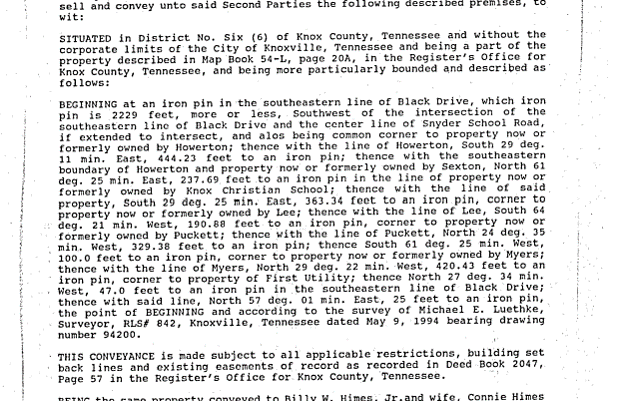
NetExtract is a service provided by NetDirector which processes various incoming documents to extract predefined data. The basic service under NetExtract is to extract the legal description from a deed or mortgage. The data is then provided back to the submitter in an XML document which allows for an easy import into your case management system.

We’ve also made some recent improvements to our Referral Extraction – this is a process that extracts and manipulates referral data from the Bank of America MFR spreadsheets.   We have found several of our clients looking for ways to incorporate this data seamlessly into their processing and now NetDirector’s NetExtract Suite has a way to do that.

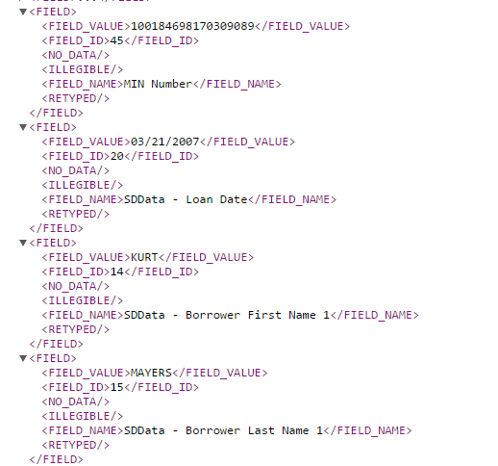
Additionally, we offer a service called DeedExtract which includes additional fields from the deed/mortgage as well as the legal description.   Fields of a document that can be scanned and included via DeedExtract include, but are not limited to:

  • County
  • Borrower Names
  • Original Lender
  • Loan Date
  • Deed Book, Page
  • Original Amount
  • Property Address
  • Rank, Trustee, Recorded Date, Parcel ID, MIN
  • and many more…

The NetExtract services have a same-day response time if submitted before 3 PM EST.   All of these services utilize OCR technology to extract information from the mortgage documents or the deed, including handwritten information! This requires no additional hardware or software on the firm’s part.  In addition, NetExtract and Deed Extract include a human audit on 100% of data generated.

Take a look at some featured examples and screenshots below:

Invoice Integration 1
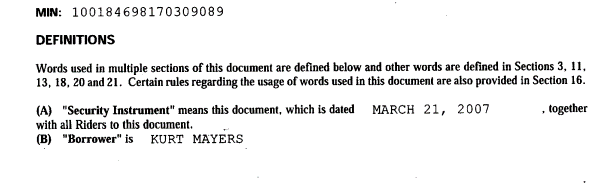
This is the scan of the original document we used for our example.
Invoice Integration 2
Here is a quick look at some of the field information pulled from the scanned document via OCR – you can see the fields have been labeled and tied to data labels.
Invoice Integration 3
An example of the long-form text typically included in a deed, like the legal description of the property.

For more information  and to schedule a free demo, please fill out our contact us form or call your integration analyst.